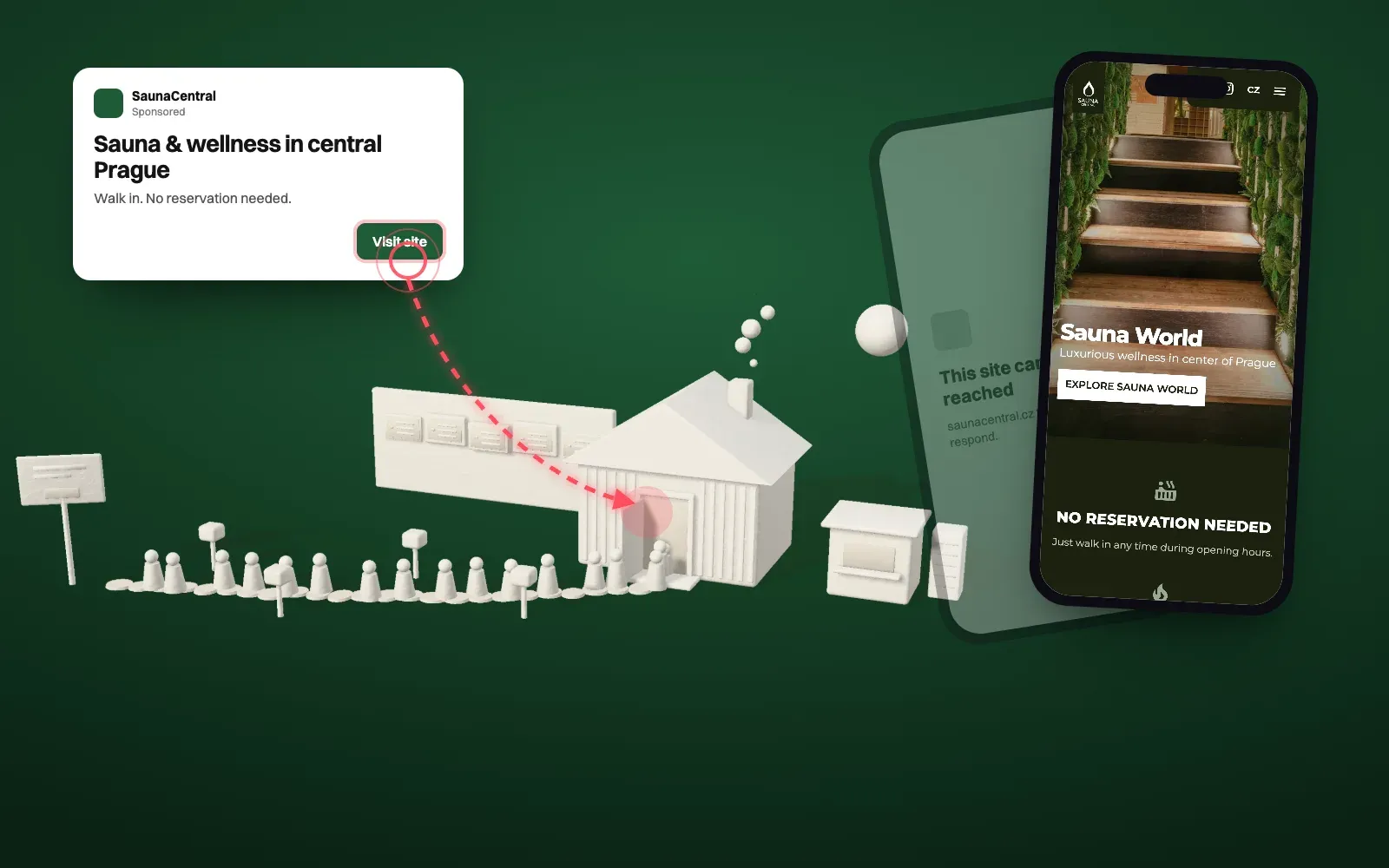
MyMonday · Firefly Information Management · 2016–2021
Teaching a marketplace what a skill is.
MyMonday matched people to work on what they can do. We built the skills graph, the matching engine and the marketplace around them, years before anyone called this AI, and with no language model anywhere.
- Product
- Interface design
- Graph architecture
- Matching engine
- Launch
Overview
Hiring ran on keywords. MyMonday ran on capability.
Most platforms matched people to roles by the words they used. But people call the same ability by different names, and skills sit next to other skills, so a keyword search misses the people a good recruiter would call first.
MyMonday set out to match on what a person can actually do, and to show the reason for every match. We were its product and technology partner from discovery to launch.
For founders whose idea needs something the obvious approach can't do.
What it had to do
- Find people by what they can do, not the words they chose.
- Show why every match matched.
- Answer fast enough to feel instant.
- Carry the whole marketplace, from first profile to signed contract.
The graph
Skills have neighbours.
We modelled people, skills, roles, projects and companies as one graph on Neo4j, with a layer of our own that decides how close two skills really are.
A graph of our own
People, skills, roles, projects, companies and industries as connected entities, not rows in a table.
Weighted by closeness
Express sits next to Node.js. The layer decides how strongly, and that weight is what matching reads.
A path for every match
The engine keeps the route it took, so every match can explain itself.
Try it
Run the search.
Search by keyword, then ask the graph. Watch who steps forward.
The product
Everything that happens after the match.
Profiles that lead with skills. Positions the graph helps define. Shortlists, messages, contracts and payments, LinkedIn import and CV export. And for larger companies, a way to find the right people already inside.
Projects / Platform team / New position
Define the position
Node.js developer
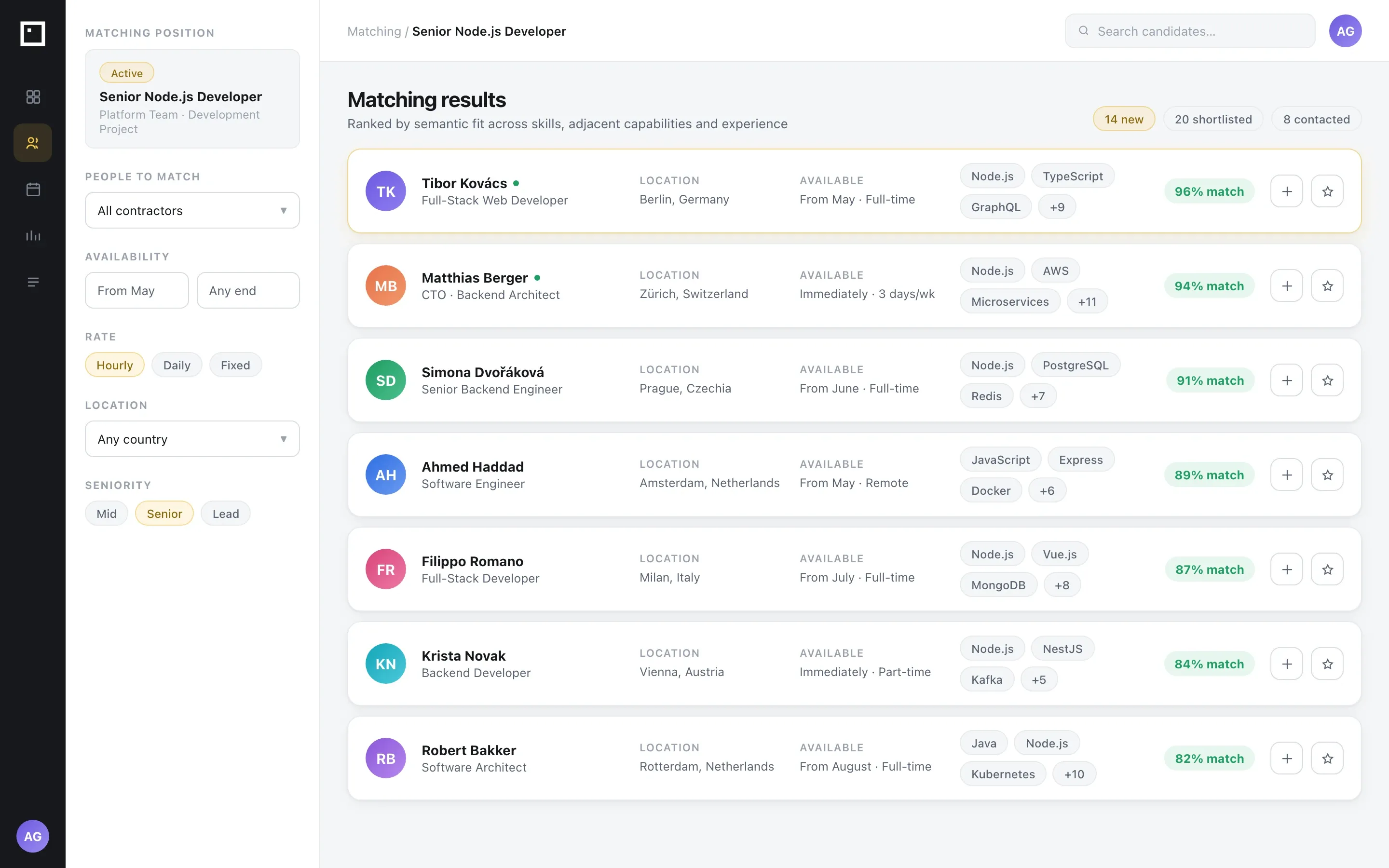
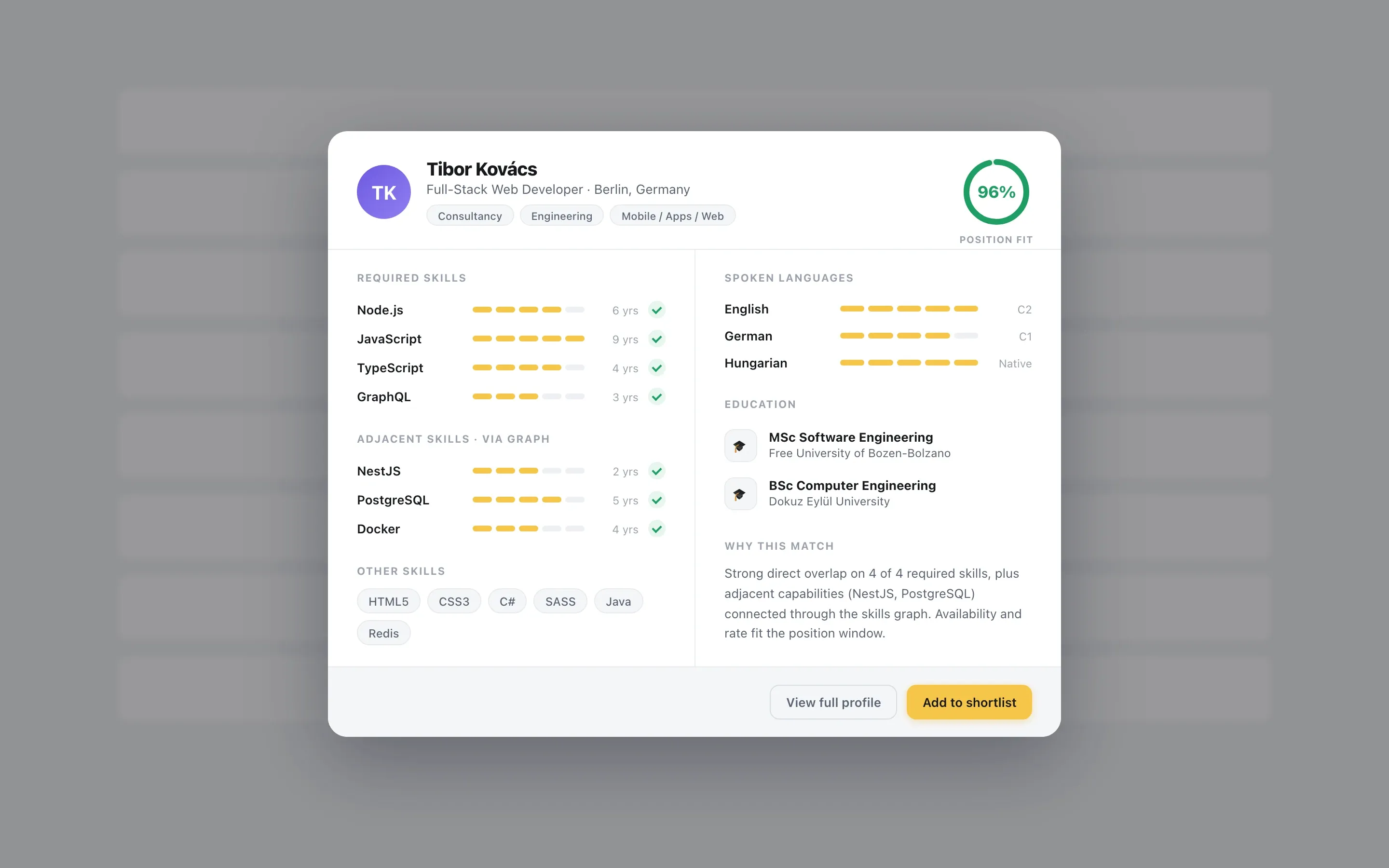
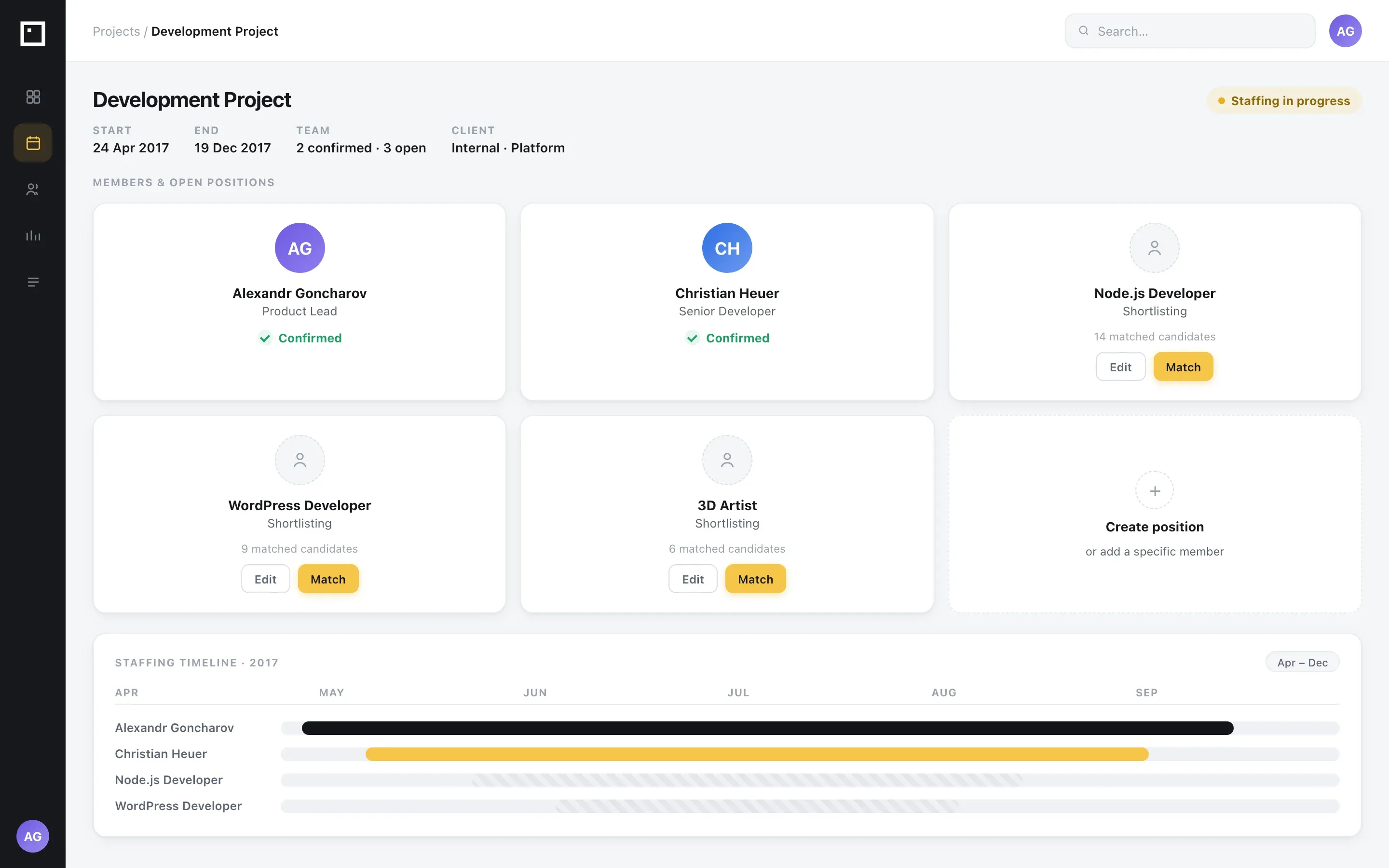
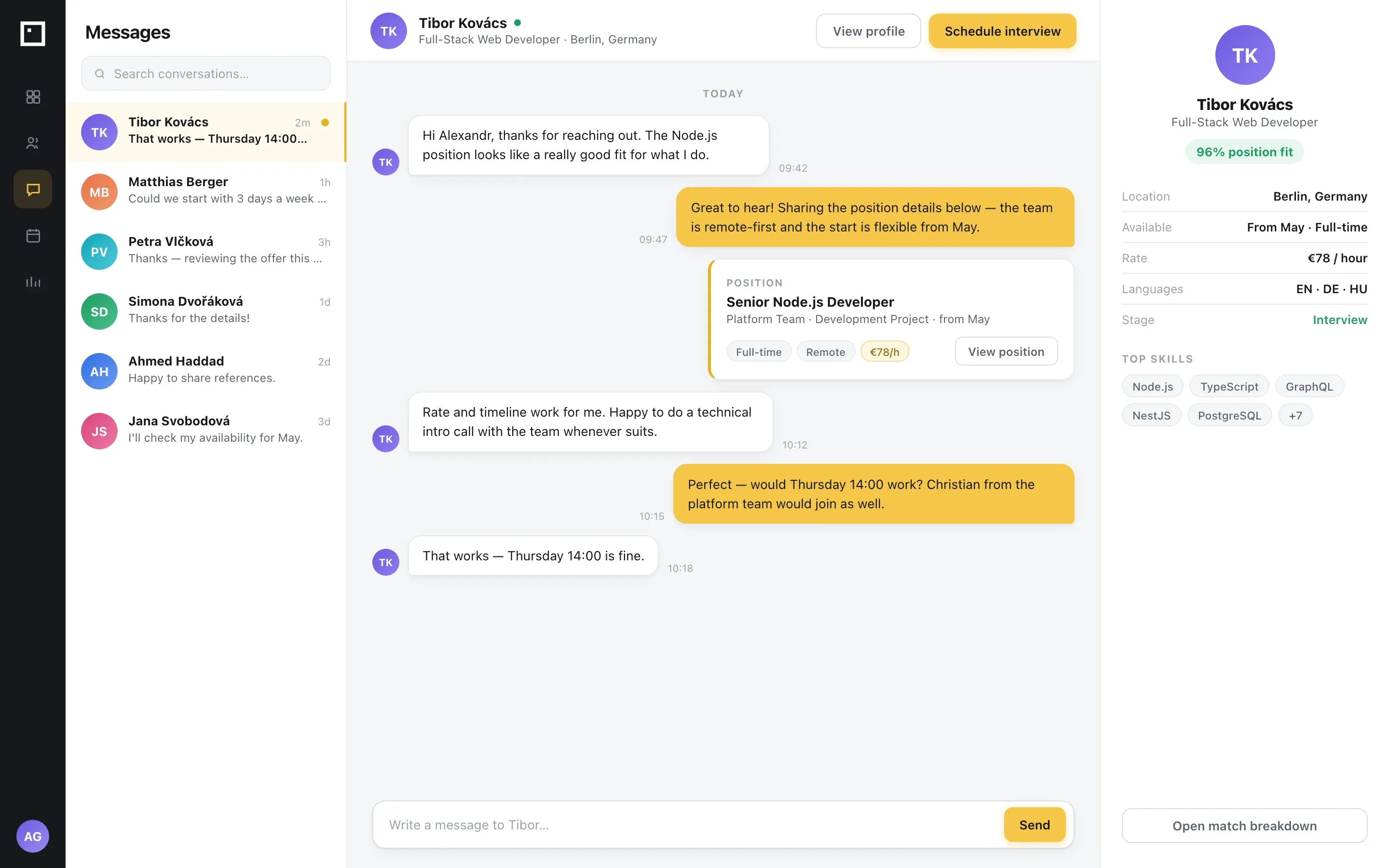
Re-createdThe platform is retired, so every screen is re-created; names and figures in them are illustrative.
The hard part
Understanding, without a language model.
MyMonday ran from 2016 to 2021, before anyone reached for a language model to do this. Its sense of meaning was built by hand: modelling the domain, weighting the relationships, walking the graph.
Harder to build. And every match could be explained, which is what a company needs when the decision is about a person.
Impact
Race them.
1M × 1Mpositions and candidates in the benchmark
Approximate · internal benchmark
At a second a match, matching is a batch job. At milliseconds, it runs while the role is still being written.
Where it landed
Launched publicly. Validated with a business pilot client.
Who we were. Our founder was MyMonday's CTO, and the studio was its product and technology partner from discovery to deployment. The platform has since been retired.